Begin below the grass.
Ask how the farm cares for soil, ground cover, water, and the recovery of grazed plants. A useful farm story starts in the field.
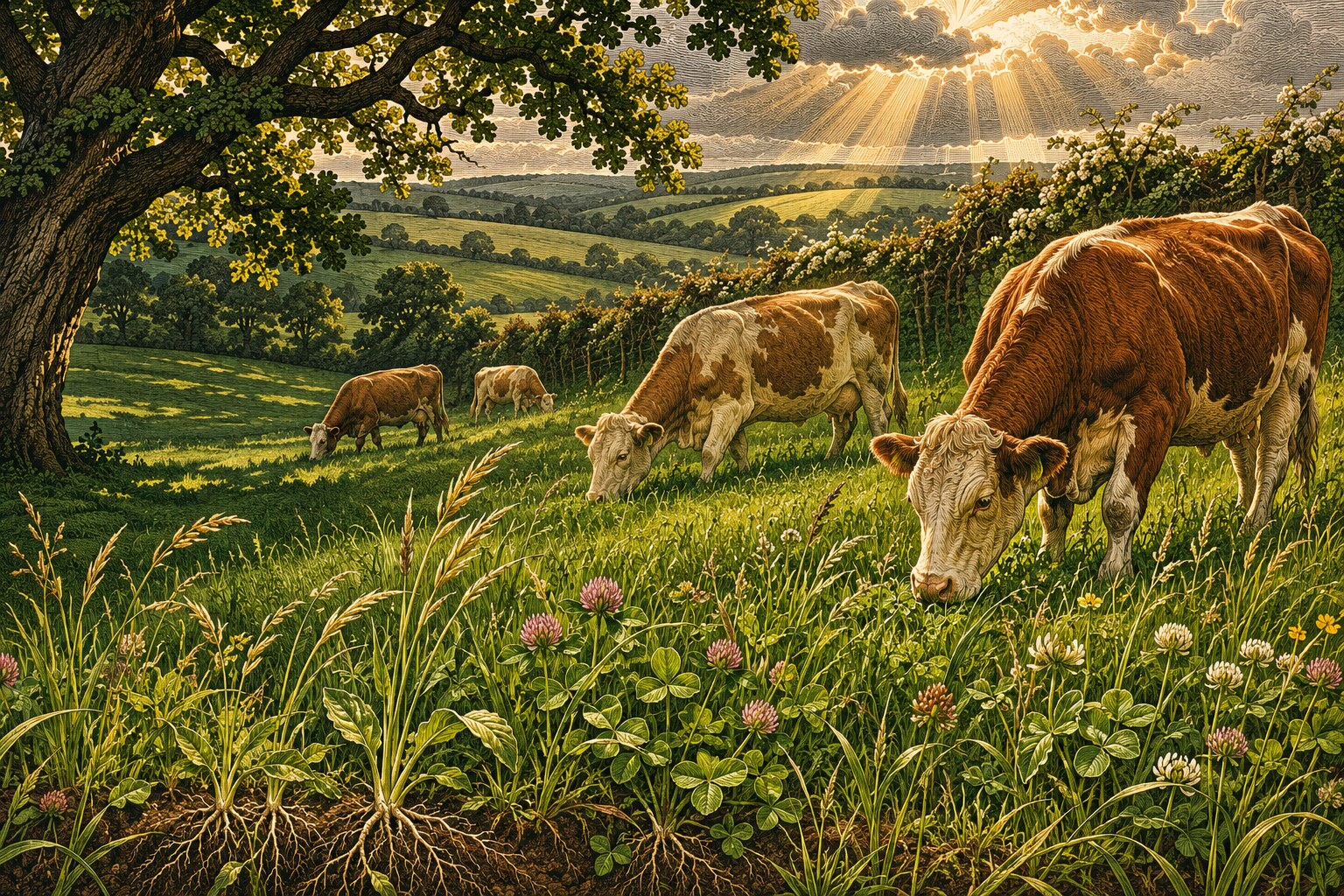
Pasture first. All the way to the table.
Get back to the ground.
Living pasture. Grazing animals. Food with a story you can trace. Take the land behind your nourishment seriously.
Rooted in the land.
Made for the table.
The whole chain matters
Grass-fed begins with a serious interest in what the animal eats.
Cattle, sheep, and goats are ruminants. Microbes in their rumen turn forage carbohydrates into fatty acids that help fuel the animal. That makes the pasture an active part of the food story.
Look closely at the plants, the grazing, the winter feed, and the finishing period. A good food culture has room for every one of those questions.
Ask how the farm cares for soil, ground cover, water, and the recovery of grazed plants. A useful farm story starts in the field.
Grass, clover, and other forage plants make different contributions. Maturity, digestibility, and how much an animal eats all matter.
Look for a clear account of the animal’s whole diet: fresh grazing, conserved forage, and the feed used through the final finishing period.
Milk, butter, cheese, beef, and lamb carry the farm into the kitchen. Learn the producer, enjoy the ingredient, and keep asking good questions.
Weston A. Price’s original work
Price treated the source of a food as part of its nutritional story. His 1930 paper examined seasonal changes in butter-fat vitamin activity, bringing animal feeding and the growing season into his investigation of nourishment.
His ambition continued in a 1931 paper on increasing the vitamin content of milk and its products. The practical thread is powerful: learn how food is produced, then take its quality seriously.
Price’s research, with the original scan and source record.
Open the original researchThe feeding leaves a signature
Benbrook and colleagues, 2018
A U.S. study of milk from cows fed a nearly all-forage diet measured its fatty-acid profile, including omega-3 fats and conjugated linoleic acid, or CLA. The authors documented the distinctive composition of that milk.
A 2026 study of 337 commercial beef samples also found feeding-system patterns in fatty acids. More diverse pasture was associated with a greater omega-3 share of polyunsaturated fats. Individual farms and samples varied.
What the animal eats shows up in the food. The farm details deserve your attention.
Follow Price’s next question
Price’s later work explored a factor he called Activator X. Christopher Masterjohn’s vitamin K2 interpretation carries that inquiry into a later chapter of nutrition writing.
Follow the Activator X storyGet serious about the source
A strong answer gives you a feeding history, a grazing practice, and a producer you can return to.
Take the farm questionsA simple text checklist to keep or print.
Ask about the full feeding history after weaning, including the finishing period. Request the actual forage and feed names. For dairy, ask what the milking herd receives throughout the year.
For a concrete meat-certification example, the American Grassfed Association requires forage feeding after weaning and prohibits deliberate grain feeding. Read the standard that applies to the product you are buying.
American Grassfed Association · 2024 ruminant meat standards
A forage system can include hay, haylage, and other conserved forage. Winter feeding belongs in the story. Ask what is stored, where it comes from, and how the farm maintains the animals’ nutrition through the season.
Conserved forage is included in the AGA ruminant meat standard linked above.
Ask what grows there, how often animals move, and how grazed plants recover. Ask how the farm adjusts to drought, wet ground, and seasonal changes. Look for practical explanations rooted in that particular place.
Ask for the certifier’s name and current standard, then match it to the farm and product. Feed, pasture access, animal care, and traceability are useful things to check. A clear standard gives a claim something concrete to stand on.
Grass-fed describes feeding. Raw describes milk that has not been pasteurized. Cultured describes fermentation. Ask about each separately, then follow the dairy guide for the fuller story of milk, preparation, and handling.
Ask who raised the animals, who processed the food, and whether the farm sells directly or through a named partner. Keep the answers with the farm’s contact details. A repeat relationship lets your knowledge grow with every purchase.
Make the knowledge edible
Choose an ingredient. Learn its source. Make something worth sitting down for.
Butter on rye bread. Cream in a sauce. Vegetables finished with a little butter. Put the milk-fat story to work in food you enjoy preparing.
Read the butter guideFollow the herd into milk, yogurt, and cheese. Ask about feed, season, and preparation; discover the different textures and uses each brings to the table.
Explore the dairy traditionExplore slow-cooked shoulder, a pot of stew, or a broth from bones. Ask the producer about different cuts and build a kitchen vocabulary beyond the familiar steak.
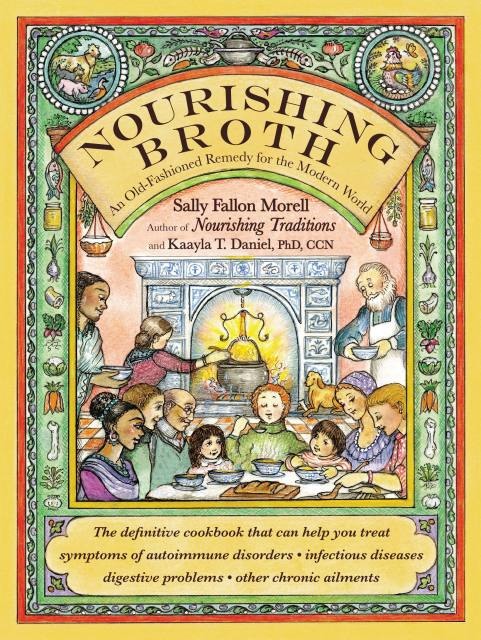 Find Nourishing Broth
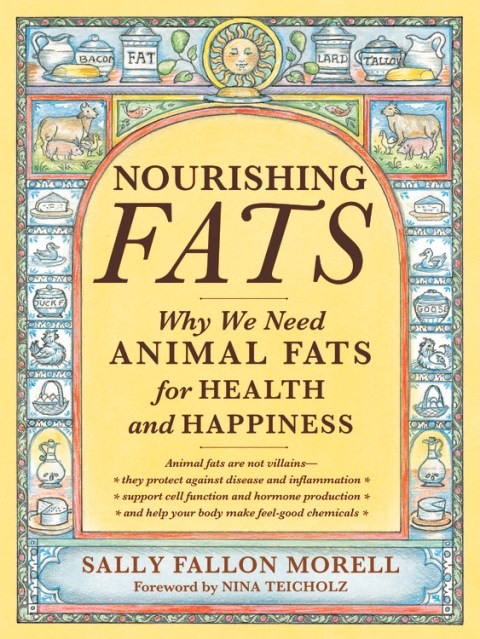
Sally Fallon Morell
Explore Sally’s case for butter, egg yolks, and traditional animal fats, including the food ideas that connect her work with Price.
Buy on AmazonBook & edition details →Sally Fallon Morell · Kaayla T. Daniel
Bring the whole-animal tradition into your stockpot, with broth-making methods and recipes for soups, sauces, and everyday cooking.
Buy on AmazonBook & edition details →Keep digging
Take the food curiosity back into the books and original papers.
An independent, pasture-first reading guide. Price’s historical research and later food-composition studies retain their own authorship. The opening landscape is an original AI-generated illustration of an imagined pasture. Sources reviewed November 28, 2026.